
Blog Post
Social Commerce & UGC Integration: Turning TikTok/Instagram Content into Checkout-Ready Revenue
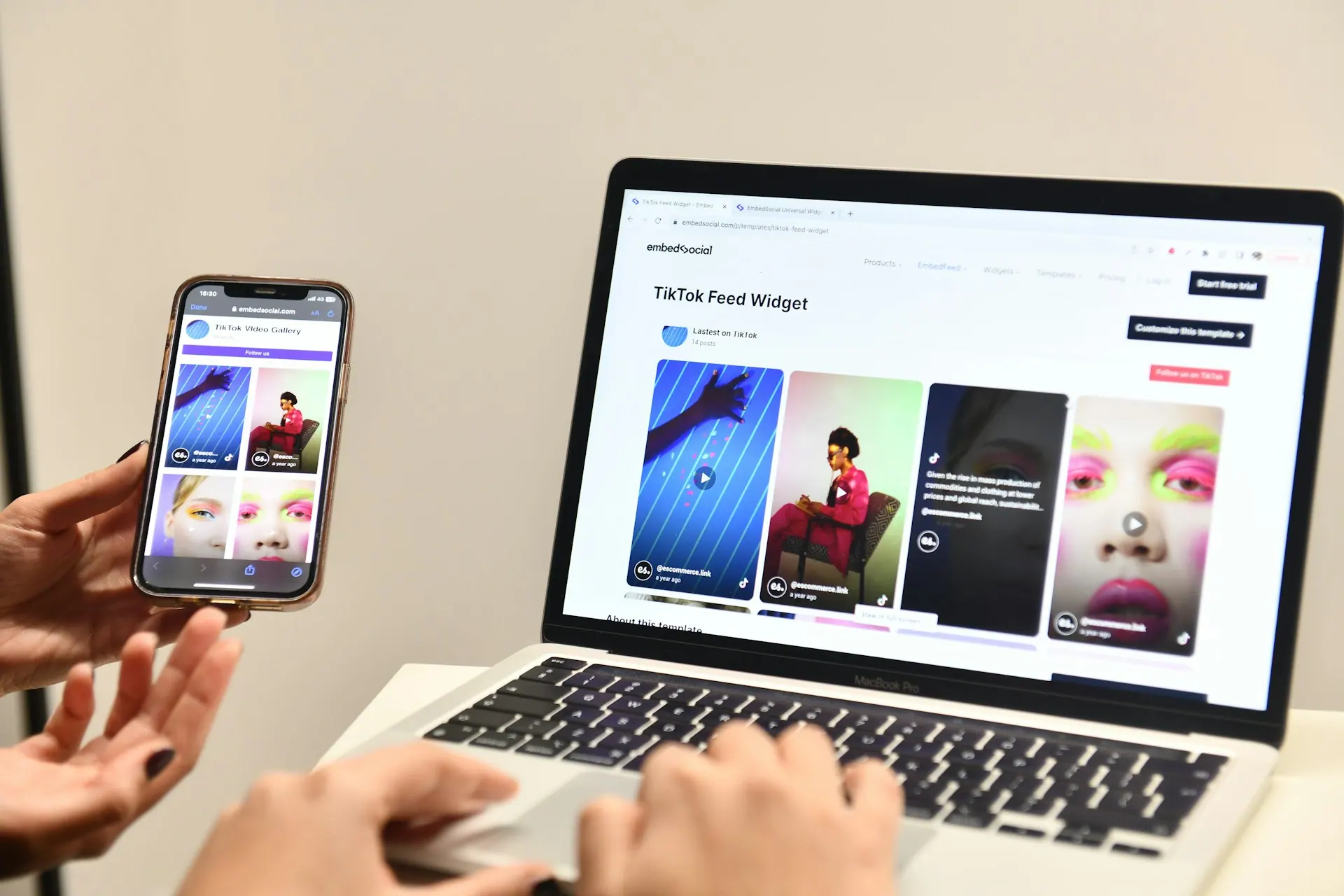
Social commerce isn’t “just marketing” anymore, it’s a purchase channel. The brands winning right now are collapsing the distance between discovery → trust → checkout by pairing:
- Social-native shopping (TikTok Shop, Instagram product tags, in-app checkout / deep-linked PDPs)
- User-generated content (UGC) (creator videos, customer reviews, unboxings, tutorials)
As a MERN full‑stack lead, I look at this as an integration + product problem:
- Integrate social platform APIs reliably (OAuth, webhooks, catalog sync, rate limits)
- Build a video-first buying experience (fast playback, shoppable overlays, attribution)
- Add creator tools and workflows (submission, rights, moderation, payouts/discount codes)
- Treat media networks/marketplaces as growth infrastructure, not one-off campaigns
Why social commerce + UGC converts better than ads alone
Traditional ecommerce asks users to trust you first. Social + UGC flips the order:
- Trust is earned via creators/customers demonstrating the product in real contexts.
- Intent is captured immediately with product tags + frictionless checkout.
- Retention improves because content keeps performing long after the ad spend stops.
The technical goal is to make UGC operational (collect → approve → publish → measure → re-use) across your website, product pages, email, and social storefronts.
Integration architecture (practical, scalable)
A clean architecture avoids brittle “one API call per page load” patterns.
Recommended building blocks (MERN-friendly)
- Frontend: Next.js (SSR/ISR for SEO + fast PDPs), video components with adaptive streaming
- Backend: Node.js (Express/Nest), modular integrations per platform
- Database: MongoDB (UGC metadata, moderation state, attribution, creator profiles)
- Queue/Workers: BullMQ + Redis (webhook processing, media ingestion, catalog sync)
- Storage/CDN: S3-compatible storage + CDN (CloudFront/Cloudflare) for media delivery
- Search (optional): OpenSearch/Meilisearch for UGC + product discovery
High-level data flow
- Catalog sync → push products, variants, pricing, inventory to social platforms
- UGC ingestion → pull approved posts/videos (or accept creator uploads)
- Rights + moderation → verify permissions, run safety checks, approve
- Shoppable placement → map UGC ↔ product SKUs (PDP galleries, collections, home feed)
- Attribution → track clicks, add-to-cart, conversions by content + creator + platform
Social platform integrations: what dev work really looks like
1) Authentication (OAuth) + token lifecycle
Most integrations start with OAuth and end with token refresh headaches.
Implementation notes:
- Store tokens encrypted (KMS or at least app-level encryption)
- Persist
expires_at, refresh proactively (background job) - Log every refresh failure with account context + remediation steps
2) Webhooks & event processing
Webhooks are where real-time commerce happens (orders, catalog updates, content events).
Best practice:
- Verify signatures
- Acknowledge quickly (200 OK), then process async via queue
- Make consumers idempotent (dedupe by event ID)
3) Catalog & inventory sync
This is usually the #1 source of operational pain.
To keep it stable:
- Sync by diff, not full re-upload
- Track last successful sync cursor per channel
- Validate data (price, currency, GTIN, image size) before calling APIs
- Plan for rate limits with backoff + retries
Platforms differ, but patterns repeat:
- Instagram/Facebook (Meta): product catalogs + product tags via Graph APIs
- TikTok: commerce/catalog sync + shop/order events depending on region/features
UGC: ingestion, management, and shoppable mapping
UGC isn’t a single “reviews widget.” You need a pipeline.
UGC sources
- Social pulls (approved posts, hashtags, mentions)
- Creator portal uploads (direct submissions)
- On-site reviews (text + images/video)
UGC entity model (simple, useful)
In MongoDB, you typically need:
ugc_item: media URL(s), captions, author/creator ID, source platform, status, timestampsugc_rights: consent proof, license type, allowed channels, expirationugc_product_map: array of{sku, placement, confidence, pinned}ugc_metrics: impressions, clicks, add-to-cart, purchases (by day)
Moderation workflow (non-negotiable)
At minimum:
- Manual review UI (approve/reject, reasons)
- Blacklist words/handles
- Optional: automated checks (nudity/violence, brand safety, spam)
Lead-dev tip: keep moderation state machine explicit:
queued → reviewing → approved → published → archived
Video-first UX: what makes it “feel like TikTok” on your store
If the experience feels like a slow product gallery, you lose.
Key UX components
- Vertical video feed (home/collection/PDP)
- Shoppable overlays (product card on top of video)
- Swipe navigation + instant play
- “Shop the look” / multi-product tagging
- Save/share actions + deep links
Performance requirements (hard constraints)
- Preload next video and poster images
- Serve multiple renditions (360p/720p/1080p) with adaptive streaming (HLS/DASH)
- CDN everything; avoid origin hits
Implementation notes:
- Run transcoding in workers (FFmpeg) after upload/ingestion
- Generate thumbnails + short preview loops
- Store a
media_manifestper UGC item (renditions, duration, aspect ratio)
Creator tools: where social commerce becomes a growth engine
If you want repeatable growth, creators need systems, not DMs.
Features that matter
- Creator onboarding + profile
- Unique links / discount codes / campaign attribution
- Submission portal for content + product requests
- Approval + publishing calendar
- Payout reporting (even if payouts are handled externally)
A practical MVP is:
- Creator signs up
- Gets trackable link/code
- Uploads content
- You approve + attach to SKUs
- Creator sees performance dashboard
Measurement & attribution (don’t ship blind)
You want to answer:
- Which video/creator drives profit, not just clicks?
- Which placement converts: PDP, collection, homepage feed?
- What’s the drop-off: view → product click → add-to-cart → purchase?
Implementation notes:
- Use event tracking with a consistent schema (server + client)
- Attribute purchases to the last relevant touch (or multi-touch if you’re mature)
- Capture
ugc_id,creator_id,platform,placement,campaign
Common pitfalls (and how I avoid them)
-
API fragility: assume token refresh failures, version changes, and rate limiting.
- Fix: queues + retries + health dashboards + alerts.
-
Rights management ignored: using UGC without permission can become a legal issue.
- Fix: store consent artifacts; enforce expiration.
-
Slow video delivery: kills conversion.
- Fix: transcoding + CDN + preloading.
-
Messy SKU mapping: UGC not connected to the right products becomes noise.
- Fix: strict mapping tools, bulk workflows, and QA checks.
Implementation roadmap (fast but safe)
Phase 1 (2–3 weeks): Foundation
- UGC data model + moderation UI
- PDP UGC module (gallery/feed)
- Basic attribution (UGC → product click → purchase)
Phase 2 (3–6 weeks): Social + video commerce
- Platform OAuth + initial API integration
- Catalog sync jobs + monitoring
- Video pipeline (upload/ingest → transcode → CDN)
Phase 3 (ongoing): Creator growth system
- Creator portal + trackable links/codes
- Performance dashboards
- Automation: approval queues, publish schedules, content reuse
If you want this done cleanly (without breaking your store)
If you tell me your stack (Shopify/Woo/custom), target channels (TikTok Shop vs Instagram tags), and where you want UGC to appear (PDP only vs full feed), I can map a precise integration plan with:
- API scope requirements + compliance notes
- Data models + webhook processing strategy
- Frontend UX components + performance budget
- A phased delivery plan that won’t disrupt checkout